
Subtotal $0.00
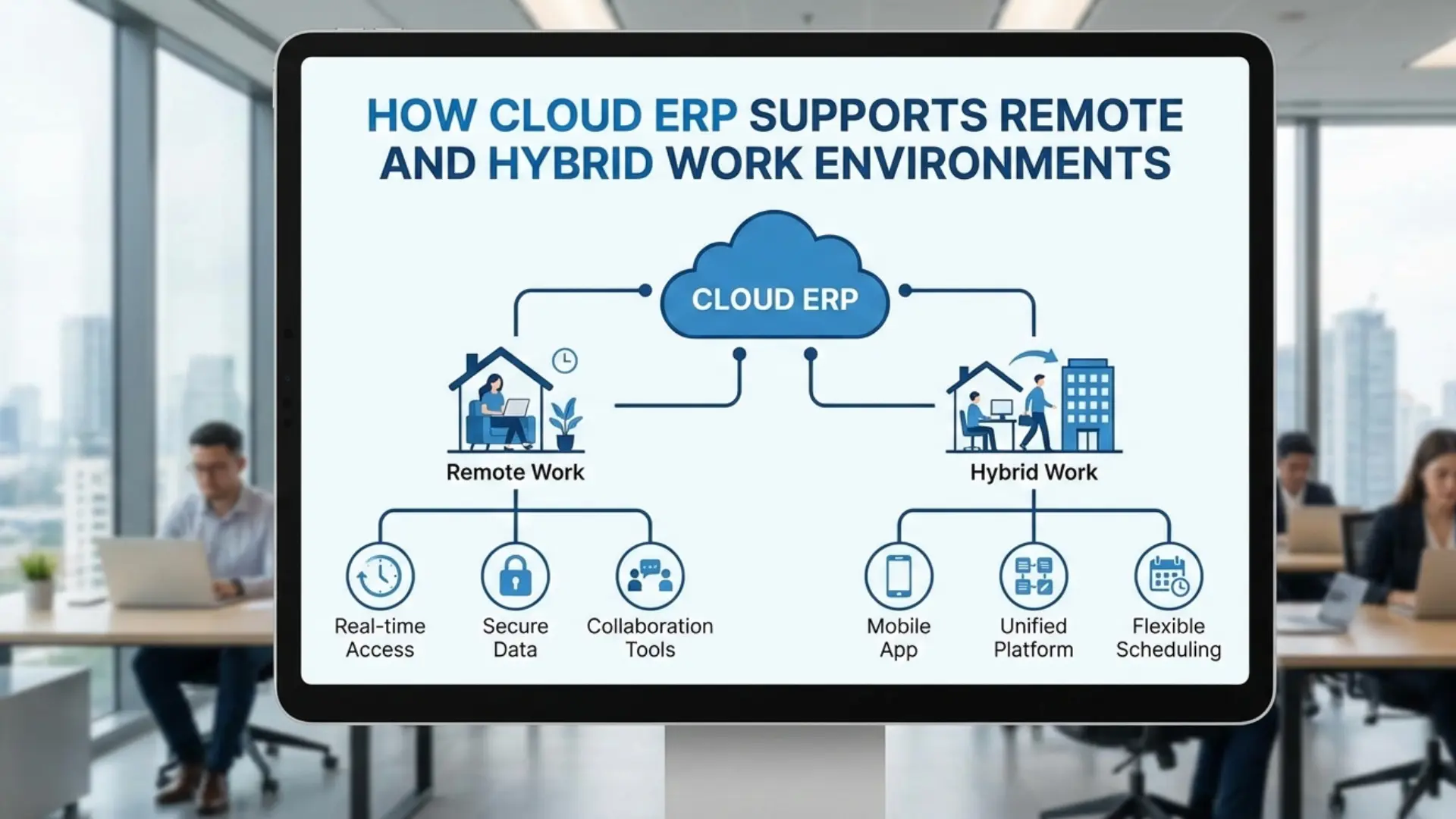
The way businesses operate has changed dramatically in recent years. Remote and hybrid work models are no longer temporary solutions; they have become a permanent and strategic way of working for organisations across industries. To successfully support this shift, companies need business systems that are flexible, secure, scalable, and accessible from anywhere. This is where Cloud ERP plays a critical role.
Microsoft Dynamics 365, including Dynamics 365 Business Central, Dynamics 365 CRM, and Dynamics 365 Finance and Operations, has emerged as a powerful Cloud ERP ecosystem that enables organisations to manage distributed teams efficiently. For UK businesses—especially those partnering with a Microsoft Dynamics 365 partner in Manchester UK—Cloud ERP is driving productivity, collaboration, business continuity, and long-term growth in remote and hybrid work environments.
Understanding Cloud ERP in the Modern Workplace
Cloud ERP (Enterprise Resource Planning) is a centralised business management system hosted on the cloud instead of traditional on-premise servers. It brings together core business functions such as:
- Finance and accounting
- Operations and supply chain
- Human resources
- Sales and customer relationship management
- Reporting and analytics
Unlike legacy ERP systems, Cloud ERP allows employees to access real-time data securely from any location using an internet connection. This makes solutions such as Microsoft Dynamics 365 Business Central, Microsoft Dynamics CRM, and D365 Finance and Operations ideal for organisations operating with remote or hybrid teams.
For businesses in the UK, working with a Microsoft Dynamics ERP partner ensures that Cloud ERP deployments align with local compliance, security standards, and business requirements.
Why Remote and Hybrid Work Needs Cloud ERP
Remote and hybrid work environments introduce operational challenges that traditional ERP systems struggle to address. These challenges include:
- Limited access to business systems outside the office
- Data silos between departments
- Poor collaboration and communication
- Increased security risks
- Delayed decision-making
- Inconsistent workflows
Cloud ERP addresses these challenges by offering centralised access, real-time reporting, built-in security, and seamless collaboration tools—all essential for modern, distributed workforces.
Key Ways Cloud ERP Supports Remote and Hybrid Work
1. Anywhere, Anytime Access to Business Data
One of the most important advantages of Cloud ERP is accessibility. Employees can securely access business systems from home, branch offices, or client locations without relying on complex VPNs or office-based servers.
With Microsoft Dynamics 365 Business Central and Dynamics 365 Finance and Operations, finance teams, operations managers, and executives can view dashboards, approve workflows, and analyse reports in real time—regardless of location.
Organisations working with Microsoft Dynamics 365 Business Central partners in Manchester UK benefit from cloud-based systems that fully support flexible and remote working models.
2. Seamless Collaboration Across Distributed Teams
Remote and hybrid teams depend heavily on collaboration. Microsoft Dynamics 365 integrates natively with Microsoft 365 tools such as:
- Microsoft Teams
- Outlook
- SharePoint
- Excel
For example:
- Sales teams collaborate using Dynamics 365 CRM
- Finance teams manage budgets using D365 Finance
- Operations teams track supply chains using Dynamics 365 Finance and Operations
This unified ecosystem ensures all teams work from a single source of truth, reducing errors, duplication, and miscommunication.
3. Centralised Data and Real-Time Insights
Cloud ERP eliminates data silos by centralising business information across departments. Leaders gain access to real-time KPIs, analytics, and performance dashboards, enabling faster and more informed decision-making.
Microsoft Dynamics 365 for Finance and Operations offers advanced reporting, AI-driven insights, and forecasting tools that are especially valuable for managing remote teams and rapidly changing business conditions.
Businesses leveraging Microsoft Dynamics consulting services in Manchester UK can further customise analytics and dashboards to support remote operations.
4. Enhanced Security and Compliance for Remote Teams
Security is a top concern for remote and hybrid work environments. Cloud ERP platforms provide enterprise-grade security features, including:
- Role-based access control
- Data encryption
- Multi-factor authentication
- Continuous security updates
Microsoft Dynamics 365 is built on Microsoft Azure, ensuring compliance with UK and global standards such as GDPR. Organisations working with Microsoft Dynamics Gold Partners in Manchester UK benefit from expert guidance on securing ERP systems for distributed users.
5. Scalable Infrastructure for Hybrid Workforces
Cloud ERP systems scale effortlessly as businesses grow or adapt. Whether onboarding new remote employees, expanding operations, or adding new business units, Cloud ERP supports growth without costly infrastructure upgrades.
This flexibility makes MS Dynamics 365 Implementation services in Manchester UK especially valuable for organisations transitioning from on-premise ERP systems to cloud-based solutions.
6. Business Continuity and Disaster Recovery
Remote work environments require reliable and resilient systems. Cloud ERP ensures high availability, automated backups, and disaster recovery capabilities that protect business operations during unexpected disruptions.
With D365 migration services in Manchester in UK, organisations can modernise legacy ERP systems and ensure uninterrupted access to critical business data.
7. Streamlined Financial and Operational Management
Managing finance and operations remotely can be complex without the right tools. Microsoft Dynamics 365 Business Central simplifies:
- Accounting and financial reporting
- Budgeting and cash flow management
- Inventory and supply chain management
- Project and resource planning
For larger enterprises, Dynamics 365 Finance and Operations provides advanced controls for compliance, global finance, and complex supply chains—making it ideal for hybrid work environments.
Role of Microsoft Dynamics 365 Partners in Manchester, UK
Choosing the right partner is critical to ERP success. A trusted Microsoft Dynamics 365 partner in Manchester UK provides end-to-end services, including:
- ERP strategy and roadmap planning
- Implementation and customisation
- Cloud migration
- Ongoing support and optimisation
Local expertise ensures compliance with UK regulations while delivering solutions tailored to remote and hybrid business models. Working with a Microsoft Dynamics implementation partner also reduces risk and accelerates time to value.
Cloud ERP and Customer Relationship Management (CRM)
Remote sales and service teams rely on centralised customer data. Microsoft Dynamics CRM and Dynamics 365 CRM enable teams to:
- Track customer interactions across channels
- Manage leads and opportunities
- Deliver consistent and personalised customer experiences
With cloud-based CRM, customer-facing teams remain productive, connected, and responsive—no matter where they work.
The Future of Remote and Hybrid Work with Cloud ERP
As hybrid work becomes the norm, Cloud ERP will continue to evolve with:
- AI-driven automation
- Predictive analytics
- Enhanced mobile and remote access
- Industry-specific ERP solutions
Microsoft’s continuous innovation ensures MS Dynamics, Microsoft Business Central, and Dynamics 365 Business Central remain future-ready platforms for modern organisations.
Frequently Asked Questions (FAQs)
Q 1. How does Cloud ERP support remote and hybrid work?
Ans: Cloud ERP enables secure, real-time access to business systems from anywhere, allowing employees to collaborate and work efficiently without being tied to a physical office.
Q 2. Is Microsoft Dynamics 365 suitable for hybrid work environments?
Ans: Yes. Microsoft Dynamics 365, including Business Central and Finance and Operations, is designed specifically to support hybrid teams through cloud access, collaboration tools, and real-time insights.
Q 3. Why choose a Microsoft Dynamics 365 partner in Manchester UK?
Ans: A local partner understands UK regulations, offers region-specific expertise, and provides tailored implementation, migration, and support services.
Q 4. What is the difference between Dynamics 365 Business Central and Finance and Operations?
Ans: Business Central is ideal for small to mid-sized businesses, while D365 Finance and Operations is designed for large enterprises with complex financial and operational needs.
Q 5. How secure is Cloud ERP for remote teams?
Ans: Cloud ERP offers enterprise-grade security, including encryption, role-based access, and compliance with GDPR and global security standards.
Q 6. Can existing ERP systems be migrated to Dynamics 365?
Ans: Yes. Organisations can use D365 migration services in Manchester in UK to move legacy ERP systems to the Microsoft Dynamics 365 cloud platform.
Q 7. Does Cloud ERP integrate with Microsoft 365 tools?
Ans: Absolutely. Microsoft Dynamics 365 integrates seamlessly with Teams, Outlook, Excel, and SharePoint to enhance collaboration and productivity.
Conclusion
Cloud ERP is no longer just a technology upgrade—it is a strategic foundation for remote and hybrid work environments. With centralised data, real-time insights, enterprise-level security, and seamless collaboration, Microsoft Dynamics 365 empowers organisations to operate efficiently in a distributed world.
By partnering with a trusted Microsoft Dynamics 365 partner in Manchester UK, businesses can successfully implement, migrate, and support Cloud ERP solutions that are built for the future of work.
Comments are closed