
Subtotal $0.00
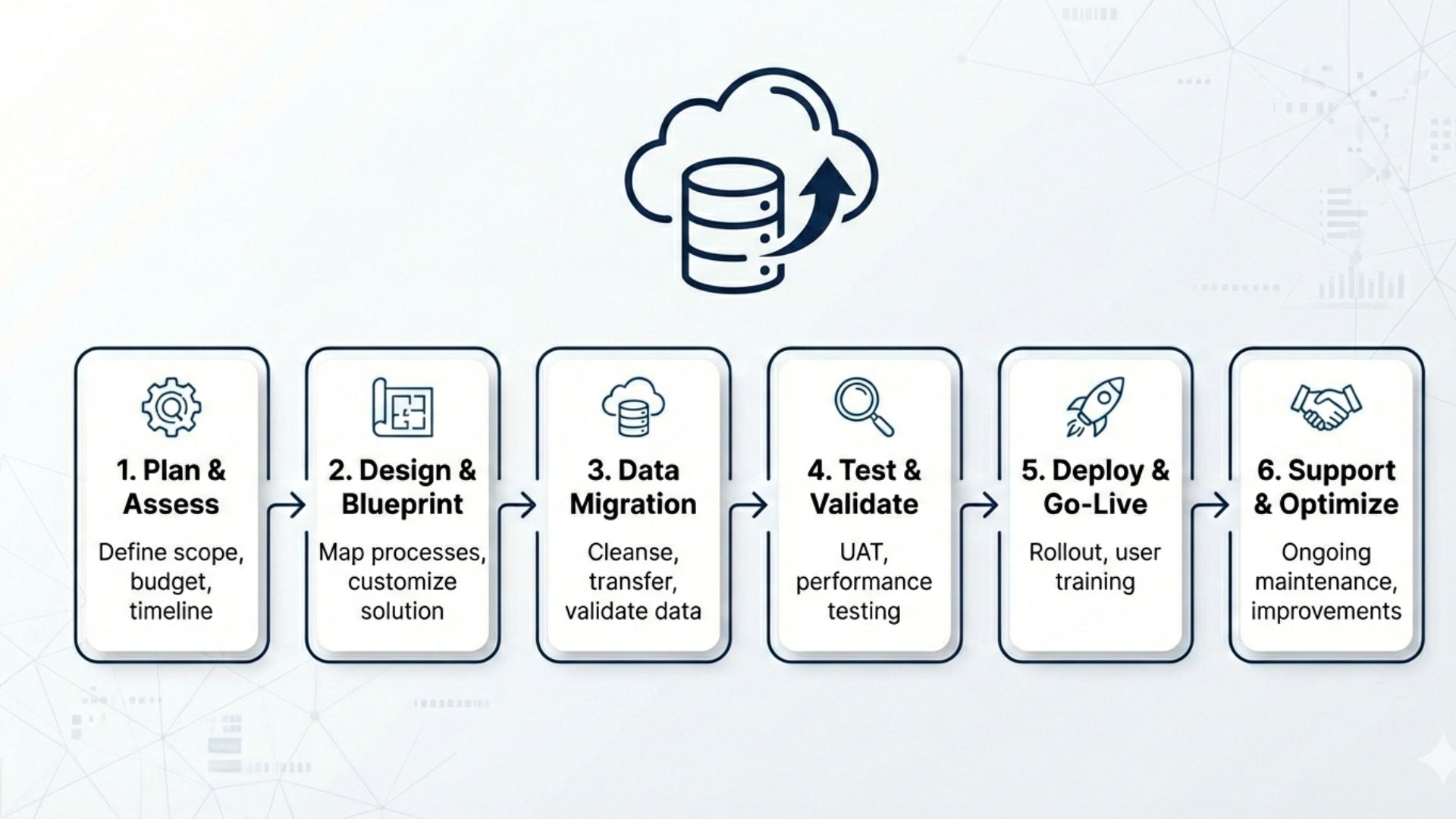
In today’s competitive digital landscape, ERP migration is no longer a technical upgrade—it is a strategic business transformation. Organisations across manufacturing, retail, distribution, and professional services are modernising their legacy systems to gain real-time insights, scalability, and operational efficiency. For businesses in the UK, especially in the North West, partnering with a Microsoft Dynamics 365 partner in Manchester UK has become a preferred choice for ensuring a smooth and successful ERP migration.
This guide provides a comprehensive, step-by-step approach to ERP migration, with a special focus on Microsoft Dynamics 365 Business Central, D365 migration services in Manchester UK, and best practices to minimise risk, downtime, and cost overruns.
What Is ERP Migration?
ERP migration is the process of moving from an existing ERP system—such as legacy on-premise software or outdated Dynamics versions—to a modern ERP platform like Microsoft Dynamics 365. This may include migrating data, processes, integrations, and users while improving system performance and scalability.
Businesses often migrate to Dynamics 365 to:
- Replace unsupported legacy systems
- Improve reporting and decision-making
- Enable cloud access and remote work
- Integrate ERP with CRM, Power BI, and Microsoft 365
- Scale operations efficiently
Why Choose Microsoft Dynamics 365 for ERP Migration?
Microsoft Dynamics 365 is a cloud-first, modular ERP and CRM platform designed to support modern business needs. With solutions like Dynamics 365 Business Central and Dynamics 365 Finance & Operations, organisations gain flexibility, automation, and intelligence.
Key benefits include:
- Cloud-based scalability and security
- Seamless integration with Microsoft tools
- Real-time analytics and AI-driven insights
- Lower total cost of ownership
- Continuous updates and innovation
For UK-based organisations, working with Microsoft Dynamics Gold Partners in Manchester UK ensures local expertise, regulatory compliance, and industry-specific knowledge.
Step-by-Step Guide to a Successful ERP Migration
Step 1: Define Clear Business Objectives
A successful ERP migration begins with clarity. Businesses must identify why they are migrating and what they want to achieve.
Ask critical questions:
- What problems does the current ERP system create?
- Which processes need improvement?
- What KPIs should improve after migration?
Clear goals help Microsoft Dynamics consulting services in Manchester UK align the ERP solution with business outcomes rather than just technical requirements.
Step 2: Choose the Right Dynamics 365 Solution
Not all ERP solutions fit every business. Selecting the correct Dynamics 365 module is critical.
- Dynamics 365 Business Central – Ideal for SMBs seeking finance, supply chain, and operations management
- Dynamics 365 Finance & Operations – Best for large or complex enterprises
- Industry extensions for manufacturing, retail, and distribution
A trusted Microsoft Dynamics 365 partner in Manchester UK can assess your needs and recommend the most suitable solution.
Step 3: Select an Experienced ERP Partner in Manchester
Your ERP partner plays a vital role in the success of your migration. Look for:
- Proven ERP migration experience
- Microsoft certifications and Gold Partner status
- Local Manchester-based support
- Industry expertise
- End-to-end services (consulting, implementation, support)
Working with a provider offering MS Dynamics 365 Implementation services in Manchester UK ensures alignment with regional business needs and UK compliance standards.
Step 4: Perform a System & Data Audit
Before migration, conduct a detailed audit of:
- Existing data quality
- Customisations and integrations
- Business processes
- Security and compliance requirements
This step ensures unnecessary data and outdated workflows are not migrated into the new system, reducing complexity and cost.
Step 5: Data Cleansing and Mapping
Data is the backbone of ERP. Migrating poor-quality data leads to poor outcomes.
Best practices include:
- Removing duplicate and obsolete data
- Standardising formats
- Mapping legacy fields to Dynamics 365 structures
- Validating data accuracy
Professional D365 migration services in Manchester UK follow structured data migration frameworks to avoid errors and data loss.
Step 6: Customisation and Configuration
Dynamics 365 is highly configurable, reducing the need for heavy customisation.
Key focus areas:
- Financial workflows
- Inventory and supply chain processes
- Approval hierarchies
- Reporting dashboards
- Role-based security
Local Microsoft Dynamics consulting services in Manchester UK ensure customisations align with UK business operations and compliance standards.
Step 7: Integration with Existing Systems
ERP systems rarely work in isolation. Integration may include:
- CRM systems
- Payroll and HR software
- eCommerce platforms
- Third-party logistics
- Power BI and reporting tools
Seamless integration improves data flow and enhances operational efficiency.
Step 8: Testing and Quality Assurance
Testing is critical to ensure system stability before go-live.
Testing phases include:
- Unit testing
- System integration testing
- User acceptance testing (UAT)
- Performance and security testing
Skipping testing is one of the most common ERP migration mistakes.
Step 9: User Training and Change Management
ERP adoption depends heavily on user acceptance. Comprehensive training ensures teams are confident using the new system.
Effective training includes:
- Role-based training sessions
- Hands-on workshops
- Documentation and user guides
- Post-training support
Many organisations also rely on Microsoft Dynamics 365 Support Services in Manchester UK to assist users post go-live.
Step 10: Go-Live and Post-Migration Support
Go-live should be carefully planned to minimise business disruption.
Post go-live activities include:
- System monitoring
- Performance optimisation
- Issue resolution
- Continuous improvement
Long-term success depends on reliable Microsoft Dynamics 365 Support Services in Manchester UK to ensure stability and ongoing optimisation.
Common ERP Migration Challenges (and How to Avoid Them)
1. Poor Planning: Avoid rushed timelines and unclear goals.
2. Data Issues: Clean and validate data before migration.
3. User Resistance: Invest in change management and training.
4. Over-Customisation: Leverage standard Dynamics features where possible.
Why Manchester Businesses Are Migrating to Dynamics 365
Manchester is a growing digital and manufacturing hub. Businesses here demand:
- Scalable cloud ERP solutions
- Local implementation and support
- Industry-specific expertise
- UK compliance and data security
This has increased demand for Microsoft Dynamics 365 Business Central in Manchester UK and trusted Microsoft Dynamics Gold Partners in Manchester UK.
FAQs: ERP Migration with Microsoft Dynamics 365
Q1. What is ERP migration?
Ans: ERP migration is the process of moving from a legacy ERP system to a modern platform like Microsoft Dynamics 365, including data, processes, and users.
Q2. How long does an ERP migration take?
Ans: Depending on complexity, ERP migration can take from 3 to 9 months.
Q3. Why choose Microsoft Dynamics 365 Business Central?
Ans: It offers scalability, cloud access, real-time insights, and seamless Microsoft integration for growing businesses.
Q4. Why work with a Microsoft Dynamics 365 partner in Manchester UK?
Local partners provide regional expertise, faster support, UK compliance knowledge, and on-site consulting when needed.
Q5. What are D365 migration services in Manchester UK?
Ans: These services include assessment, data migration, implementation, testing, go-live, and post-migration support for Dynamics 365.
Q6. Do I need ongoing support after migration?
Yes. Microsoft Dynamics 365 Support Services in Manchester UK ensure system stability, user adoption, and continuous optimisation.
Conclusion
A successful ERP migration requires strategic planning, expert guidance, and a reliable technology partner. By following a structured, step-by-step approach and working with an experienced Microsoft Dynamics 365 partner in Manchester UK, businesses can minimise risk, improve efficiency, and unlock long-term growth.
Whether you are migrating from NAV, GP, AX, or a legacy ERP, choosing the right MS Dynamics 365 Implementation services in Manchester UK ensures your ERP investment delivers measurable business value—today and in the future.
Comments are closed